
Last Updated on January 11, 2026 by Cindy Benezra
When you’ve lived through trauma, the healing journey often feels layered and complex. There’s the emotional work of processing your experiences, the mental work of reframing old beliefs, and the often overlooked physical work of helping your body feel safe again. This is where a sound bath can be transformative.
Sound baths are more than just a relaxation technique; they are a gentle but powerful tool for somatic healing, helping release tension, regulate the nervous system, and restore a sense of calm from the inside out. As someone who has personally experienced their benefits, I can say that they are one of the most soothing and supportive self-care practices for trauma recovery.
What is a Sound Bath?
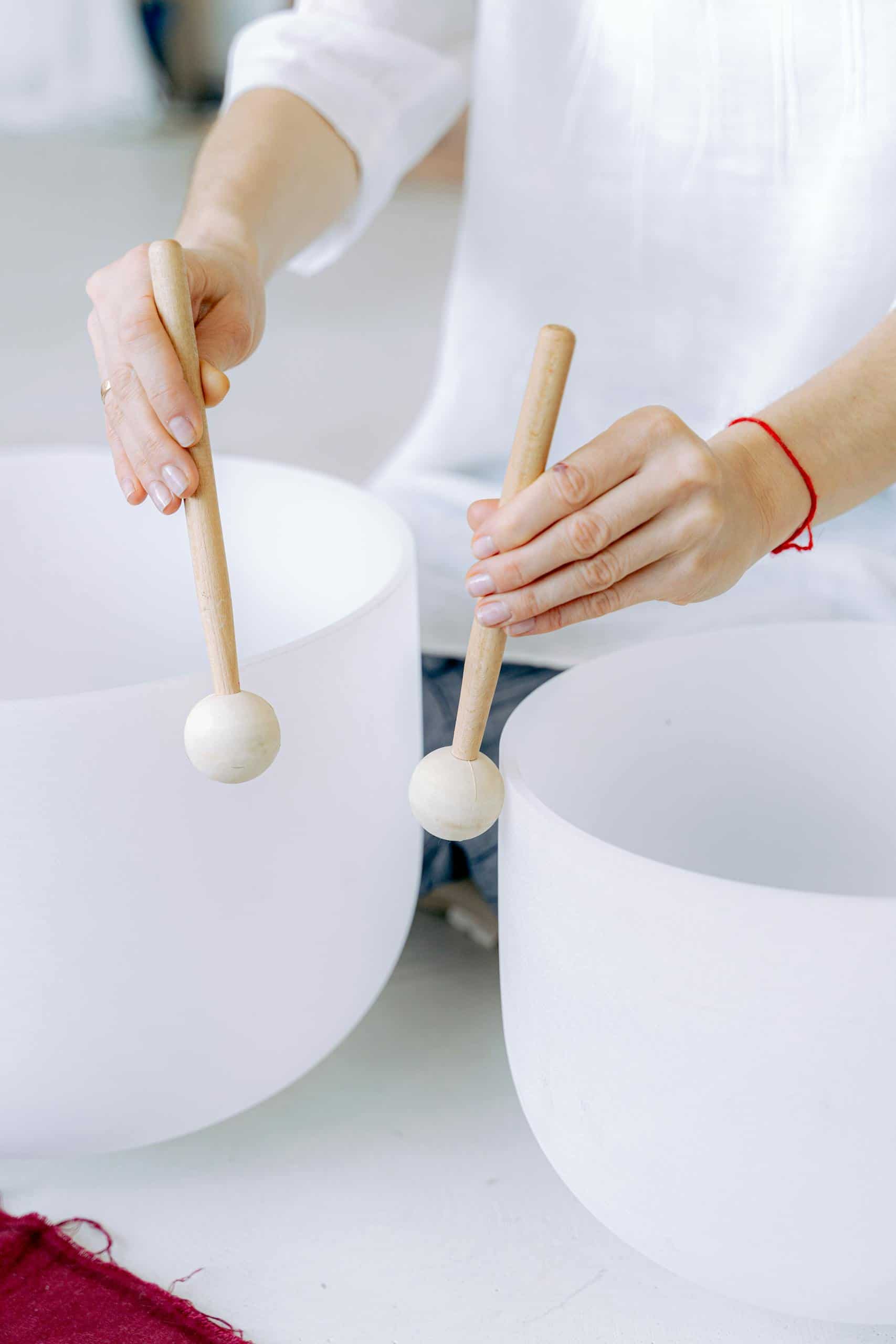
A sound bath is a meditative experience in which you are surrounded by harmonious sound waves created by instruments such as:
- Crystal singing bowls
- Tibetan bowls
- Gongs
- Chimes
- Drums
- Tuning forks
Instead of water, you are “bathed” in sound. These vibrations move through your body, helping to shift brainwave states, relax muscles, and quiet overactive thoughts. Many people describe the experience as being wrapped in a cocoon of sound where they feel safe, supported, and deeply relaxed.
The Science Behind Sound Bath Benefits
While sound baths have ancient roots, modern research is beginning to validate what healers have known for centuries: sound has the power to heal. Everything in our bodies, from our cells, tissues, and even our brainwaves, vibrates at specific frequencies. Trauma and chronic stress can create dissonance in these vibrations, leading to physical tension, emotional imbalance, and mental fatigue.
The sound bath benefits come from the way sound frequencies interact with the body:
- Nervous System Regulation: Certain frequencies stimulate the parasympathetic nervous system, shifting you out of “fight or flight” and into “rest and digest.”
- Brainwave Entrainment: The repetitive, harmonious tones help the brain slow down into alpha and theta states, similar to deep meditation or the moments just before sleep.
- Muscle Relaxation: Vibrations penetrate deep into muscles and fascia, easing tension.
- Stress Hormone Reduction: Some studies show sound therapy can lower cortisol levels, reducing the physical toll of stress.
- Emotional Processing: Sound can bypass the logical mind, allowing stuck emotions to surface and release without forcing the process.
Why Sound Baths Are Powerful for Trauma Healing
Trauma lives not just in memory, but in the nervous system and the body. You might notice tightness in your chest, an inability to take deep breaths, or an overactive startle response long after the traumatic events are over.
A sound bath offers a safe way to release some of this stored energy because:
- You don’t have to talk about your trauma—the healing happens through sensation and vibration.
- Your body learns safety again—when the nervous system repeatedly experiences calm in a safe environment, it begins to rewire.
- You reconnect with your body—instead of feeling numb or disconnected, you start noticing gentle, pleasant sensations again.
My Personal Experience With Sound Baths
I finally tried a sound bath after hearing so much of it’s benefits. Years of talk therapy had helped me process my story, but I wanted to explore more somatic healing options as I knew the body still can carry the trauma despite mentally processing it.
As I sat on my yoga mat in a softly lit room, the facilitator began to play crystal singing bowls. The sound filled the air and seemed to vibrate through my entire body. My breathing slowed, and the knot between my shoulder blades began to soften. At the end, a restored calmness.
In the weeks that followed, I noticed small changes: I slept more deeply, I startled less easily, and my body felt more grounded in moments that used to trigger me. Sound baths are a powerful self-care tool for anyone and especially those seeking trauma recovery.
Somatic Benefits of Sound Baths
Somatic healing focuses on the mind-body connection and the physical release of trauma. The sound bath benefits for somatic healing include:
- Deep Muscle Release – Vibrations loosen fascia and muscle tension without force.
- Enhanced Body Awareness – Feeling the sound move through different areas helps reconnect you to your body.
- Breath Regulation – The slow, rhythmic nature of sound baths often deepens breathing naturally.
- Reduced Hypervigilance – Your body learns that it’s safe to let its guard down.
- Improved Sleep – Restorative states during a sound bath can carry into better nighttime rest.
How to Get Started With Sound Baths
If you’re ready to explore sound baths as part of your trauma healing and self-care, here’s how to begin:
- Find a trauma-informed facilitator to ensure you feel safe and supported.
- Wear comfortable clothing and bring a blanket or eye mask for comfort.
- Hydrate before and after—sound can have a detoxifying effect on the body.
- Start with shorter sessions (15–30 minutes) and build up as you get comfortable.
- Experiment with online sound baths using good headphones if in-person isn’t accessible.
Integrating Sound Baths Into Your Healing Routine
Healing from trauma is not a one-time event, it’s a journey. Incorporating sound baths into your self-care routine can provide:
- A weekly reset for your nervous system
- A safe space to explore embodiment without pressure
- A gentle, enjoyable practice that supports emotional and physical healing
Pairing sound baths with other supportive practices like gentle movement, journaling, or therapy can amplify results and create a holistic path to recovery.
Final Reflection
The most powerful sound bath benefits go beyond relaxation. The benefits help you rebuild your connection to your own body and sense of safety. In the gentle wash of sound, there’s no pressure to “fix” yourself, no need to relive your trauma. Just presence, breath, and vibration.
If you’ve been searching for a self-care practice that meets you exactly where you are, a sound bath might be the soft place to land you’ve been longing for.
