
An honest look at what vision boards can and cannot do for your healing
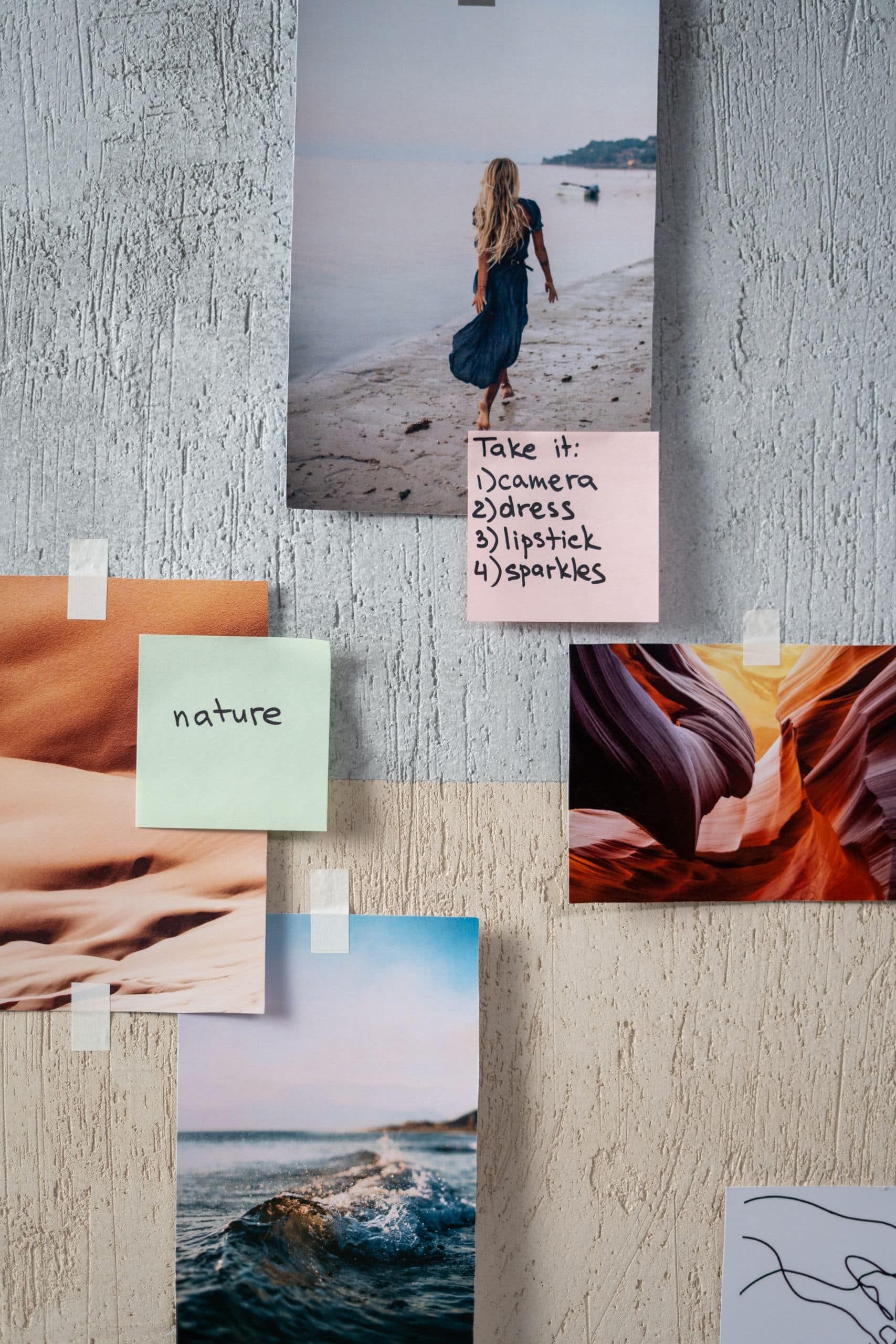
A mental health vision board is a visual collection of images, words, and intentions that represent the emotional state, relationships, and inner life you are working toward. Unlike a traditional vision board focused on things you want to acquire, a mental health vision board is less about what you want to have and more about how you want to feel and who you want to become. Used with intention, research suggests it can be a genuinely useful tool for healing, goal-setting, and building a felt sense of what is possible.
I have made vision boards over the years and found real value in them. The task of choosing images and asking myself what I actually want my life to feel like, rather than just look like from the outside, has brought me lots of clarity. I have also implemented a practice I find even more powerful, and I want to share both because I think different seasons of healing call for different tools.
What Is a Mental Health Vision Board Exactly?
A standard vision board is usually a collage of images representing goals. A mental health vision board goes somewhere different. Instead of a new car or a dream vacation, it centers on emotional and psychological intentions. What does feeling safe feel like? What does a healed relationship with yourself look like? What kind of energy do you want to carry into your days?
The images, words, and phrases on a mental health vision board are meant to serve as anchors and reminders of the inner life you are building, not just the external circumstances you are hoping for. That distinction matters enormously, especially for those of us healing from trauma, where the real work is internal long before it becomes visible.
A self-care vision board focuses on the practices, rhythms, and rituals that support your well-being. It might include images of rest, of nature, of meaningful connection, of the daily habits that make you feel most like yourself.
The question to focus on is not what do I want to have, but what do I want to feel. That shift changes everything about how you build a vision board and what it does for you.
Does Vision Boarding Actually Work? What the Research Says
The research here is genuinely interesting, and it comes with an important caveat that most vision board content conveniently leaves out.
Studies on mental imagery and visualization show that imagining a desired outcome activates many of the same neural pathways as actually experiencing it. This is why athletes have used visualization techniques for decades with measurable results. The brain, to a meaningful degree, responds to a vividly imagined experience in ways that resemble responding to a real one.
However, psychologist Gabriele Oettingen’s research adds something crucial to this picture. Her studies found that purely positive visualization of outcomes, imagining the destination without acknowledging the obstacles, can actually reduce motivation and follow-through. The brain registers the imagined outcome as already achieved and relaxes accordingly. The vision boards that work are the ones paired with honest reflection on what stands between you and what you want, and a genuine commitment to the process of getting there.
For mental health and healing specifically, the research on visualization is most compelling when it is paired with felt sense, meaning you are not just picturing an outcome but physically embodying the emotional state of it. This is exactly where my own practice has evolved.
What I Do Now and Why It Goes Deeper
Vision boards are a good starting place. They are creative, they clarify what you actually want, and there is something meaningful about the act of curating images that represent your aspirations. I still use them here and there, and I think they can be genuinely valuable, especially when you are early in the process of figuring out what healing even looks like for you.
But what I do primarily now is visionary meditative work. The practice is simple in concept and profound in effect. During meditation, I picture my desired outcome in as much physical and emotional detail as I can access. I do not just see it, I feel it. What does my body feel like in that state? What is the quality of the peace I am reaching toward? What does it feel like in my chest, my shoulders, my breath, to actually be there?
The research on this kind of embodied visualization is compelling. When you engage not just the visual imagination but the felt sense of an outcome, you are working with the body’s own healing intelligence rather than just the mind. For trauma survivors in particular, bringing the body into the practice is important. Trauma is stored somatically, and healing it requires more than cognitive intention. It requires the body to begin to believe that a different state is possible.
A vision board and a visionary meditation practice are working toward similar outcomes. One is external and creative, and the other is internal and somatic. Both have a place, so the question is which one your healing needs right now.
Six Steps To a Mental Health Vision Board That Does Something
If you want to make one that genuinely serves your healing rather than just looks beautiful on a wall, here is how to approach it with intention.
1. Start With How, Not What
Before you choose a single image, ask yourself how you want to feel. Not what you want to have or where you want to go, but the emotional state you are working toward. Peaceful. Present. Connected. Free. Write those words down first. Let them guide everything you select.
2. Choose Images That Make You Feel Something
Avoid images that look aspirational and focus on images that actually produce a physical sensation when you look at them. A warmth in your chest or a softening in your shoulders, that physical response is your nervous system recognizing something it wants. Listen in and trust it.
3. Include Your Healing, Not Just Your Destination
A mental health vision board should honor where you are as much as where you are going. Include images that represent the practices keeping you grounded right now. Is that your journal, a walk outside, a therapist’s office? The small daily things that are building the foundation belong here, too.
4. Place It Somewhere You Will Actually See It
A vision board in a drawer is just a craft project. Put it somewhere you naturally encounter it in your morning routine, like your bathroom mirror, desk, or closet. The goal is for it to enter your peripheral awareness regularly, not for it to be a big event you have to seek out.
5. Use It As a Meditation Anchor
This is where a vision board becomes more than a visual. Sit with it for a few minutes regularly, not just glancing at it but actually dropping into the feeling of what you are looking at. Let your body experience the emotional state it represents. This is the bridge between the visual and the visceral.
6. Let It Evolve
You are not the same person you were six months ago. Your vision board should not be either. Revisit it seasonally. Remove what no longer resonates. Add what does. A living board that changes with you is far more useful than a static one that represents who you were when you made it.
The Intention Is the Point
Whether you make a vision board, practice visionary meditation, or find something else entirely that helps you hold the image of who you are becoming, what matters is the quality of intention behind it. These are not magic. They are practices that work when you show up for them honestly, when you let them ask something of you, and when you stay willing to be surprised by what emerges.
Healing is creative work. Give yourself permission to approach it that way.
Frequently Asked Questions
What is the difference between a vision board and a mental health vision board?
A traditional vision board focuses primarily on external goals and acquisitions. A mental health vision board centers on emotional states, inner healing, and psychological well-being. The images and words on a mental health vision board represent how you want to feel and who you want to become, rather than what you want to have.
Does Vision Boarding Actually Work For Mental Health?
Research on mental imagery shows that visualization activates similar neural pathways to actual experience, which can support motivation and emotional regulation. However, vision boards work best when paired with honest reflection on obstacles and a genuine commitment to the process, rather than used as pure positive thinking. The most effective practice combines visual intention with felt sense.
What Should I Put On a Mental Health Vision Board?
Focus on images and words that represent emotional states rather than things. Include representations of how you want to feel, the relationships you want to nurture, the practices that support your healing, and the version of yourself you are working toward. Choose images that produce a physical sensation when you look at them, not just ones that look aspirational.
What Is Visionary Meditation, and How Is It Different From a Vision Board?
Visionary meditation involves picturing your desired outcome during meditation while embodying the physical and emotional sensations of being in that state. Where a vision board is a visual external tool, visionary meditation is an internal somatic practice. Both work toward similar outcomes and can complement each other, but visionary meditation engages the body more directly, which can be particularly powerful for trauma recovery.
Sources
Oettingen, G. (2014). Rethinking Positive Thinking: Inside the New Science of Motivation. Current/Penguin Random House.
Research on mental contrasting showing that purely positive visualization without acknowledging obstacles can reduce motivation and follow-through.
Study demonstrating that mental imagery activates similar neural pathways to physical experience, supporting the neurological basis for visualization practices.
Van der Kolk, B. (2014). The Body Keeps the Score: Brain, Mind, and Body in the Healing of Trauma. Viking.
Foundational work on somatic trauma storage and the importance of body-based practices in trauma recovery, supporting the case for embodied visualization.
*This post is for informational purposes only and is not a substitute for professional mental health support. If you are working through trauma, please consider reaching out to a licensed therapist or counselor.
